
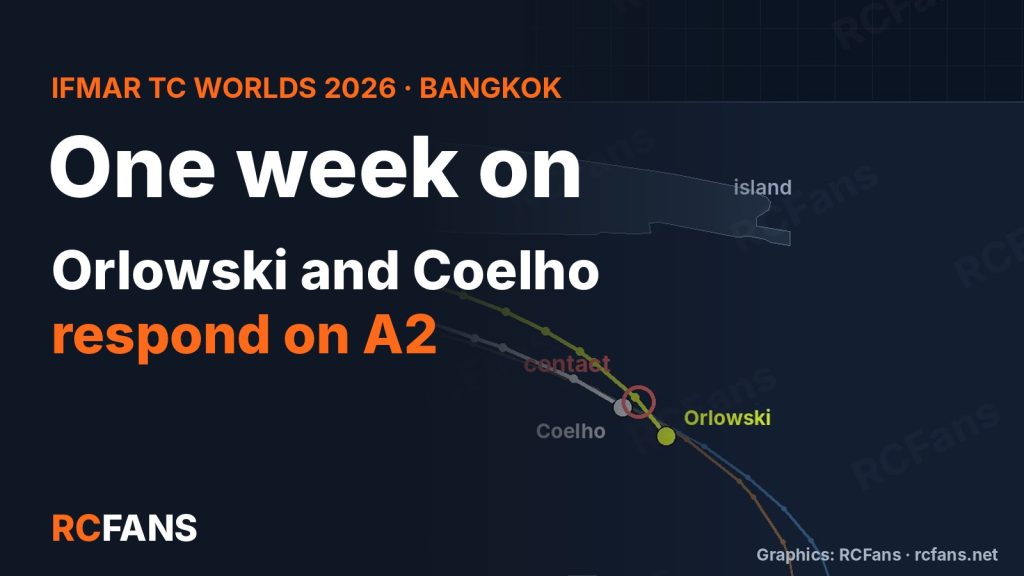
One week after the IFMAR electric touring car World Championship in Bangkok ended, Michal Orlowski and Bruno Coelho have each responded, in statements published by Trackside RC Media (Orlowski’s statement, Coelho’s statement), to the contact in the second Modified A-main (A2) and the penalty that followed: Coelho was first given five seconds, which was later changed to a one-lap deduction. Both describe Orlowski’s rear end becoming unsettled, but they differ on what happened next, and on whether Coelho was given a stop-and-go instruction during the race.
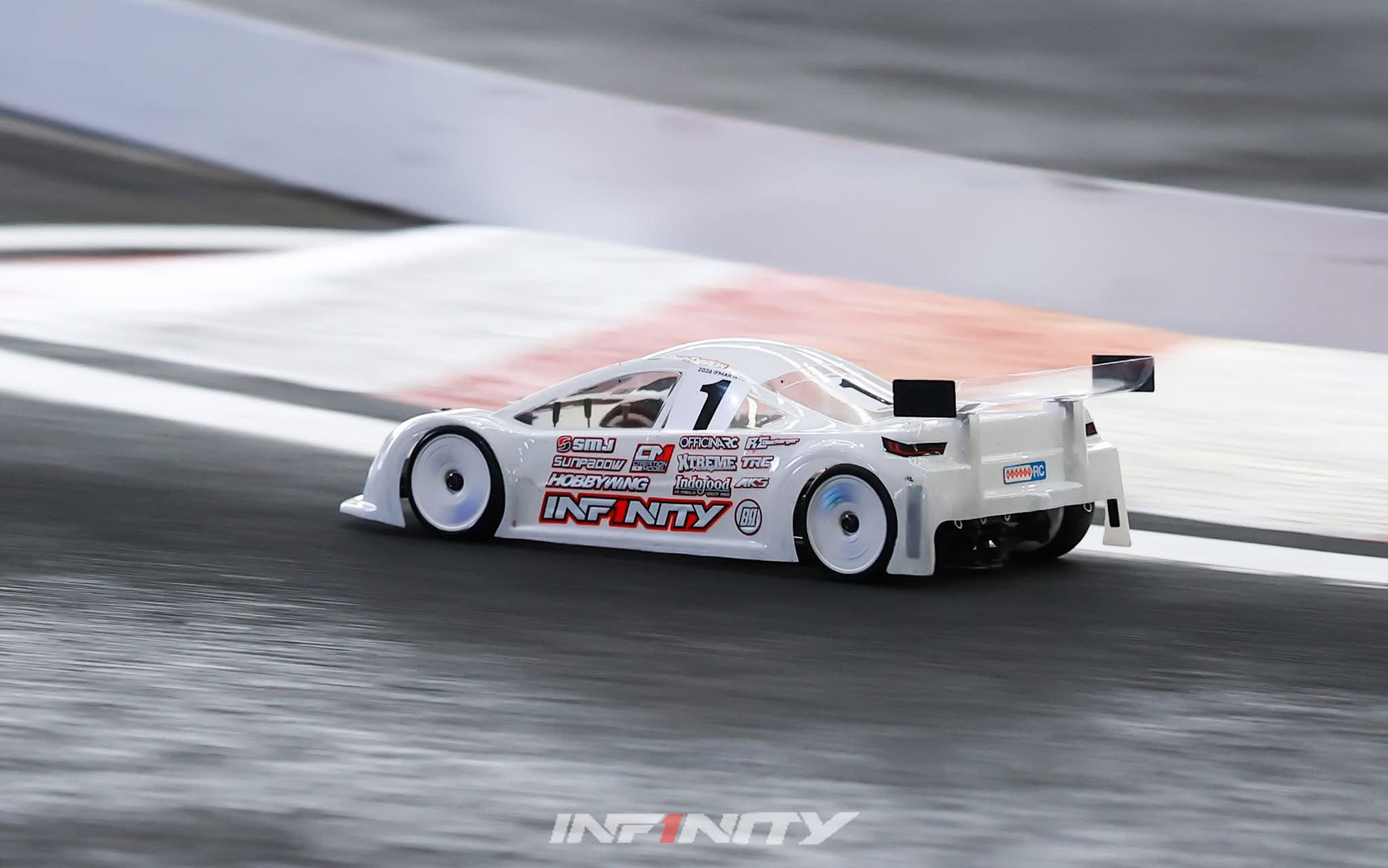
Bruno Coelho’s car. The number on the car in this photo is not his A-main number.
What did the two drivers see before the contact?
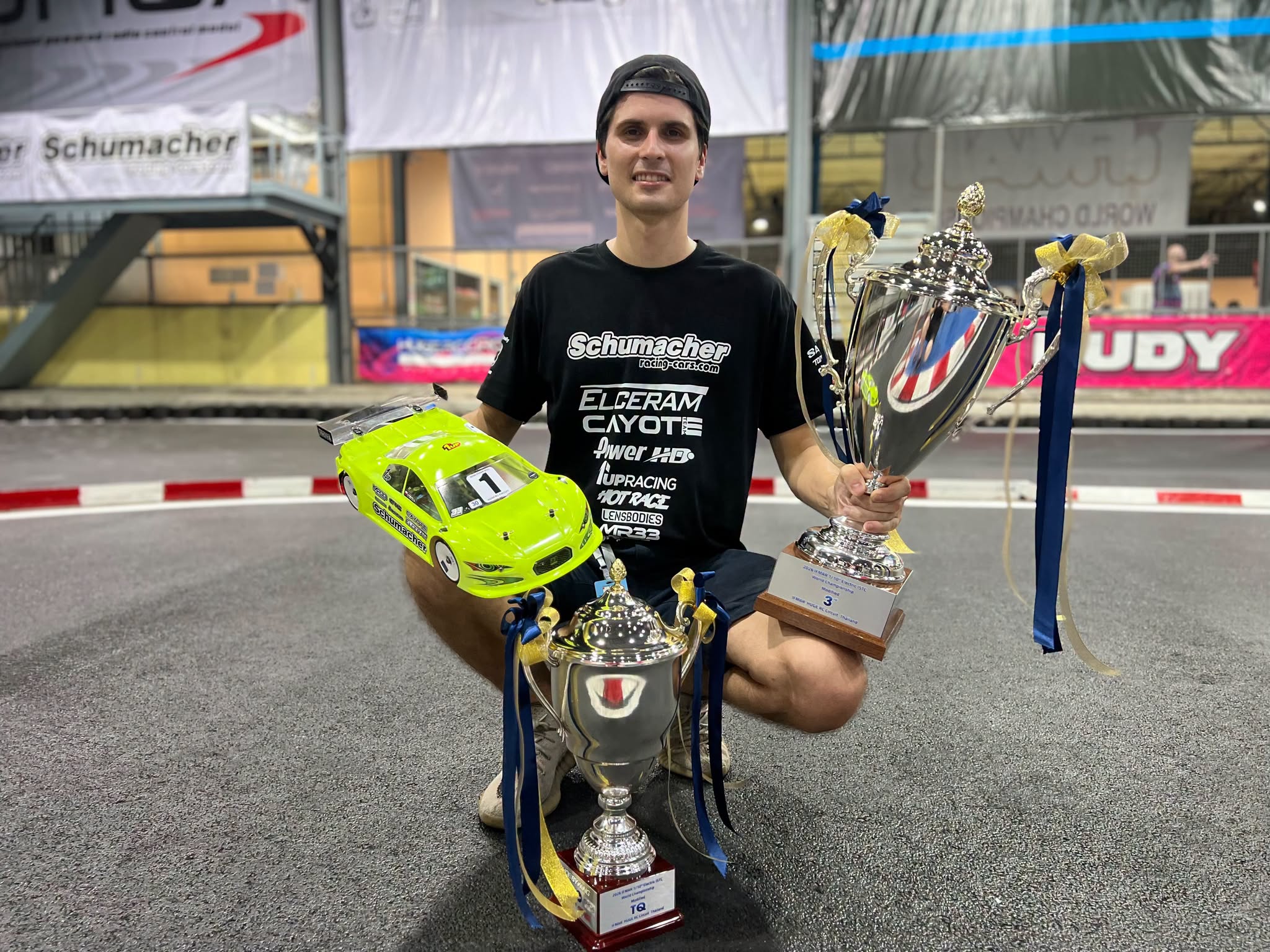
Michal Orlowski
Orlowski acknowledges that his car got loose on the exit of the hairpin near the end of A2, but denies that it had spun before the contact. He says he carried a normal line into the next corner, and that Coelho should have waited immediately after the contact; had he done so, Orlowski says, Coelho would most likely have won the title again.
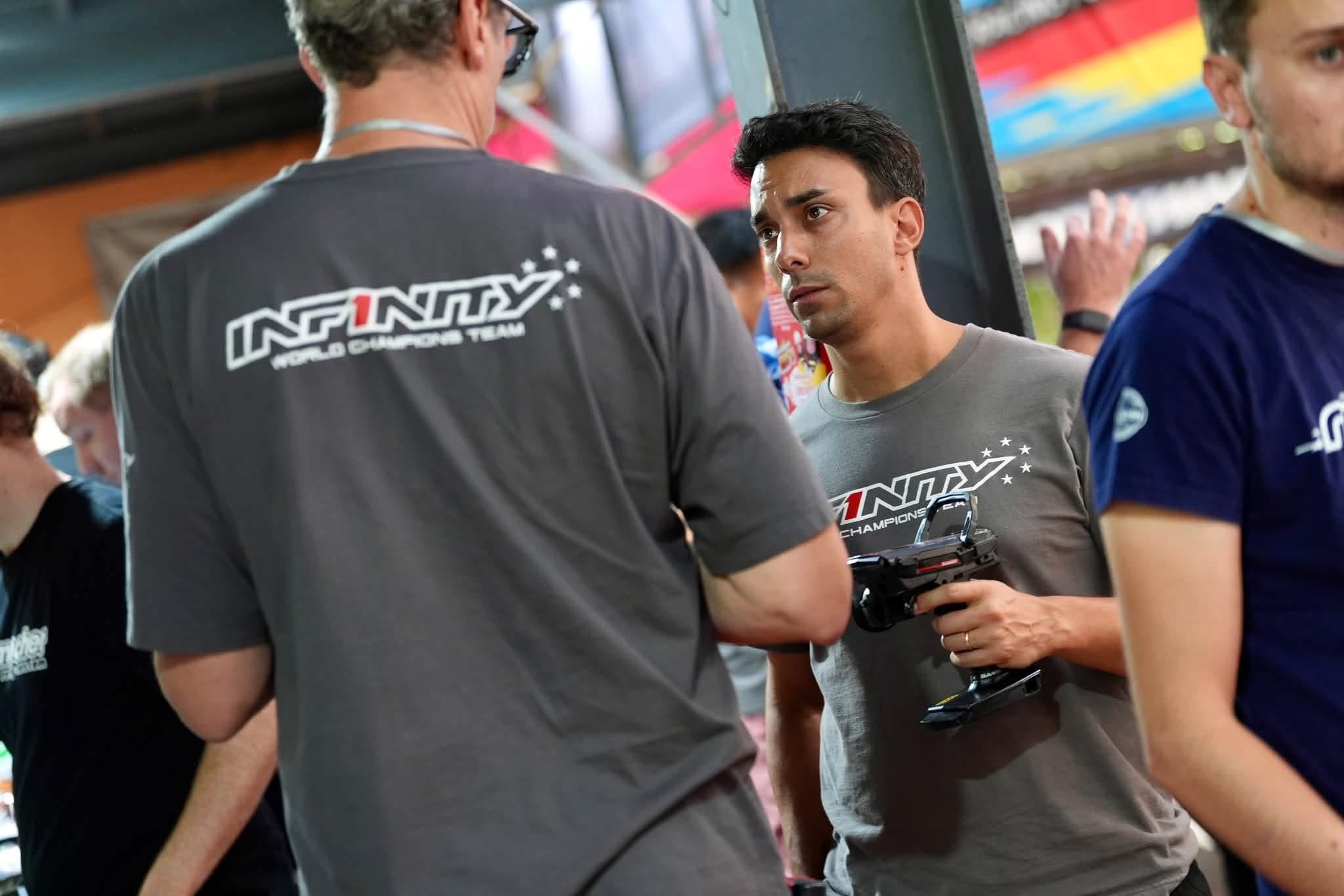
Bruno Coelho
Coelho denies taking Orlowski out on purpose. He says the rear of the car ahead stepped out, and that as Orlowski tried to recover, the car changed direction in front of him and he could not avoid it. He explains that he saw it as contact following a loss of control by the car ahead, not a move he had forced, so he kept racing and expected the referee to assess it.
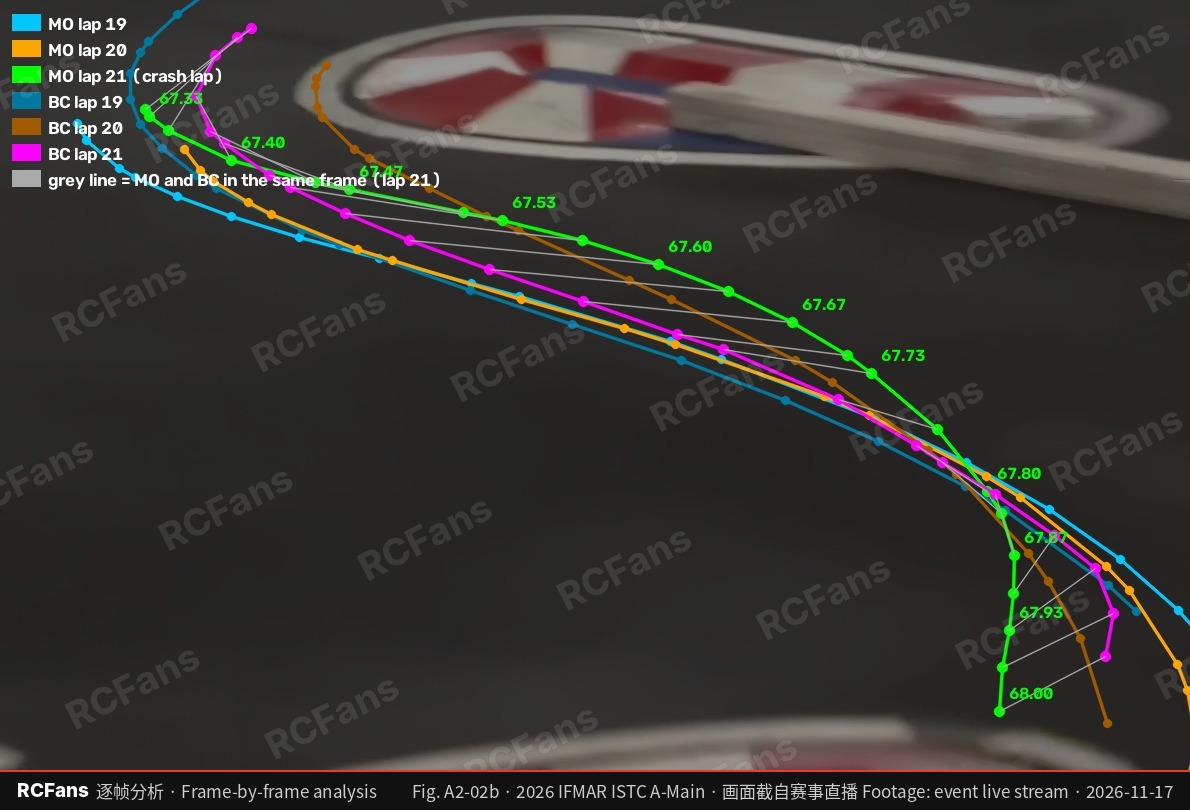
Paths of both cars on laps 19, 20 and 21 of A2 (MO = Orlowski, BC = Coelho). On the incident lap, Orlowski exits the corner closer to the island. Positions are estimated frame by frame from video, not telemetry, and position alone cannot show whether a car was out of control.
On A3, Orlowski says he was not willing to run the race in a way that would hand the title to Coelho and leave himself fourth overall.
What has been confirmed about the stop-and-go instruction and the lap penalty?
Orlowski says Coelho was given a stop-and-go and did not serve it, and links this to the later one-lap penalty. Coelho says he was not given a stop-and-go instruction for his car during the race; as he recalls, he learned of the five-second penalty around 15 to 20 minutes after A2. He says he has asked the organisers for a written explanation of both penalties and was still waiting when he made his statement.
The first notice posted by the organisers stated that Coelho received five seconds for failing to follow referee instructions. According to Red RC’s A2 report, when the penalty was announced during the race it was called for car 1 (Orlowski) instead of car 2 (Coelho), and the error was only noticed after the race. Red RC’s post-event round-up linked the later one-lap deduction to the rule on incidents in the final two laps. What instruction was actually given during the race, and why the penalty was changed, still need to be shown by written records.
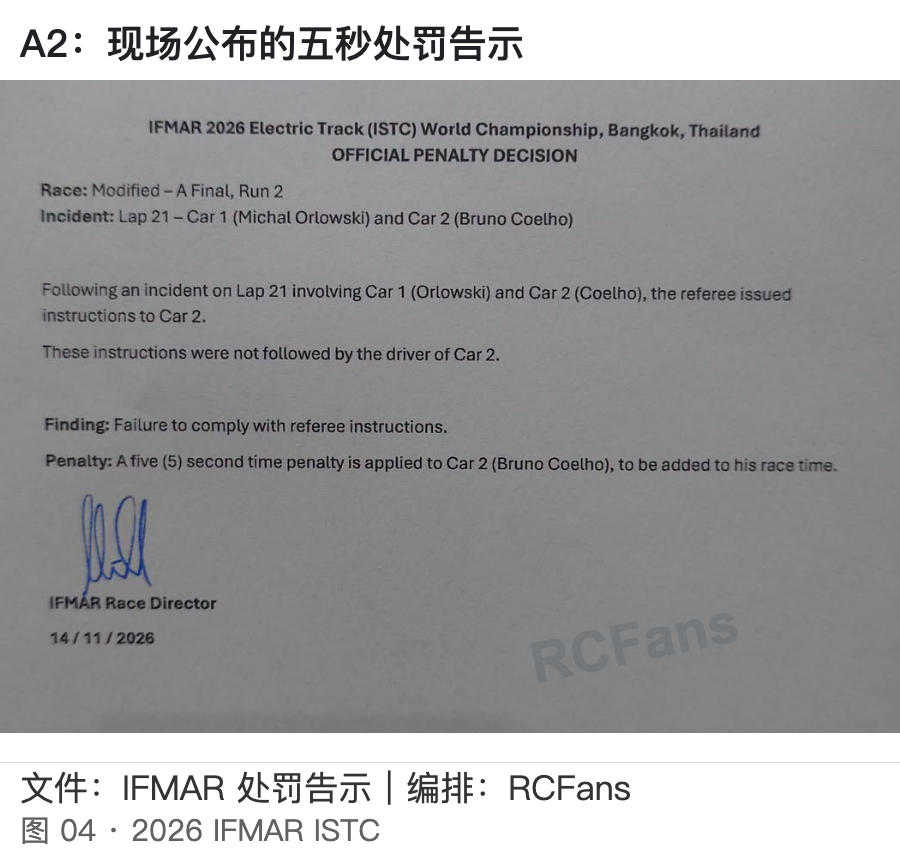
The first penalty notice posted by the organisers: five seconds for car 2 (Coelho) for failing to follow referee instructions.
RCFans’ view
The two drivers’ statements explain how each of them read the situation and why they acted as they did. Our view has not changed: the available evidence is not enough to conclude that anyone caused a collision on purpose, nor to establish whether Coelho could have avoided it. Whether the contact was avoidable, whether a penalty was justified, and whether a stop-and-go instruction was given during the race are three separate questions.
Coelho says he has requested a written explanation from the organisers. RCFans will follow whether one is published and will update this story if there is news.
Video | An animated recap of A-main rounds 2 and 3 in about two minutes
We turned the two hardest-to-follow parts of our original report into an animation of about two minutes: how the two cars came together in A2, how the penalty changed, and what remains unclear about the opening lap of A3. The graphics were drawn by RCFans from the official timing and race footage; no broadcast clips are used.